The holidays are a time for celebration, connection—and sugar. From festive cookies and fruitcakes to fizzy sodas and steaming mugs of cocoa, the abundance of sweet treats at Christmas brings comfort and joy. But new research shows these festive indulgences may be more dangerous than most realize, especially for long-term health, your gut, and even your mood.
Sweet But Deadly



Date
Dec 5, 2025
Dec 5, 2025
Dec 5, 2025
Author
Olabisi Adenuga
Read time
5 min
Not Just Empty Calories: The Hidden Dangers of Holiday Sweets
For many, a slice of cake or a can of soda feels like a harmless ritual. Yet studies published in JAMA Psychiatry and by leading health organizations reveal that these moderate indulgences do far more than add a few extra calories. Consuming soda and similar sweets—especially over the holidays—reshapes your gut microbiome, can elevate depression risk, and fuels inflammation that harms both mind and body.
Chronic Disease and Christmas Treats
Large studies consistently link sweetened beverages and holiday desserts to:
Weight gain and obesity (from high calorie intake and poor satiety)
Type 2 diabetes (driven by blood sugar spikes and insulin resistance)
Heart disease and stroke (from chronic inflammation and lipid imbalance)
Fatty liver (from excess fructose)
Increased cancer risk (due to inflammation and metabolic dysfunction)
Dental erosion and gum disease (especially from sticky and hard Christmas candies)
New Findings: Sugar, Gut Bacteria & Mood
A new German study adds a critical layer—revealing that every incremental increase in soft drink intake raises the odds of depression by about 8%. The risk is highest among women (up 16%), even when adjusting for BMI and antidepressant use. The culprit? Sweets and sweetened drinks fuel the growth of pro-inflammatory gut bacteria like Eggerthella, which is linked to reduced serotonin (the brain’s “feel-good” neurotransmitter), increased inflammation, and depressive symptoms.
How Holiday Sugar Alters Your Gut-Brain Axis
Packed with simple sugars, holiday treats can overwhelm the gut’s capacity to absorb glucose and fructose, leaving extra to feed bad bacteria. This leads to:
More pro-inflammatory bacteria (Eggerthella, Hungatella)
Damaged gut lining and reduced good bacteria
Higher risk of systemic and neuro-inflammation, underpinning depression, anxiety, and fatigue
Evidence confirms that inflammation from excess sugar is tied to over 30% higher risk of depressive symptoms—and the connection is especially marked in women, due to hormone and serotonin dynamics.
The Sweet Cycle—And How to Break It
Sweets hijack both gut and brain. They trigger dopamine surges, driving cravings, energy crashes, and a vicious cycle of mood instability and emotional eating. Artificial sweeteners, once considered safe, may also disrupt gut bacteria and worsen risk for insulin resistance, stroke, and cognitive decline.
Age, Gender, and Holiday Risks
Teens and Young Adults: High sugar intake during adolescence is tied to impaired learning, greater risk of depressed mood, and cognitive decline later in life.
Older Adults: Excess sugar intake adds to inflammation and neurodegenerative risks.
Women: More prone to serotonin disruptions, amplifying mood effects.
Beyond the Brain—Body-wide Harm
Excess sweets contribute to:
Insulin resistance and visceral fat
High blood pressure and atherosclerosis
Accelerated cellular aging (oxidative stress)
Dental decay and costly dental care after the holidays
Even as little as one or two sugary drinks a day increases risk for metabolic and cardiovascular diseases.
Health Coach Guidance: How to Survive the Festive Sugar Rush
The holidays are filled with tempting sweets, but you don’t have to give up everything you love to maintain your well-being. Let’s shift away from guilt or strict avoidance—empower yourself by making mindful choices, building awareness, and celebrating every small victory.
Simple Strategies for Empowered Choices
Start with Curiosity:
Notice what you enjoy most about holiday treats. Is it the flavor, the comfort, the energy boost, or the tradition? Understanding “why” helps you choose “how much” with confidence.Tune In to Your Triggers:
Pay attention to when and why cravings hit hardest. Are you reaching for sweets out of habit, stress, or fatigue? Identifying these patterns is the first step to regaining control.
Festive Swaps Without Missing Out
Try mixing in healthier, festive options alongside your favorites:
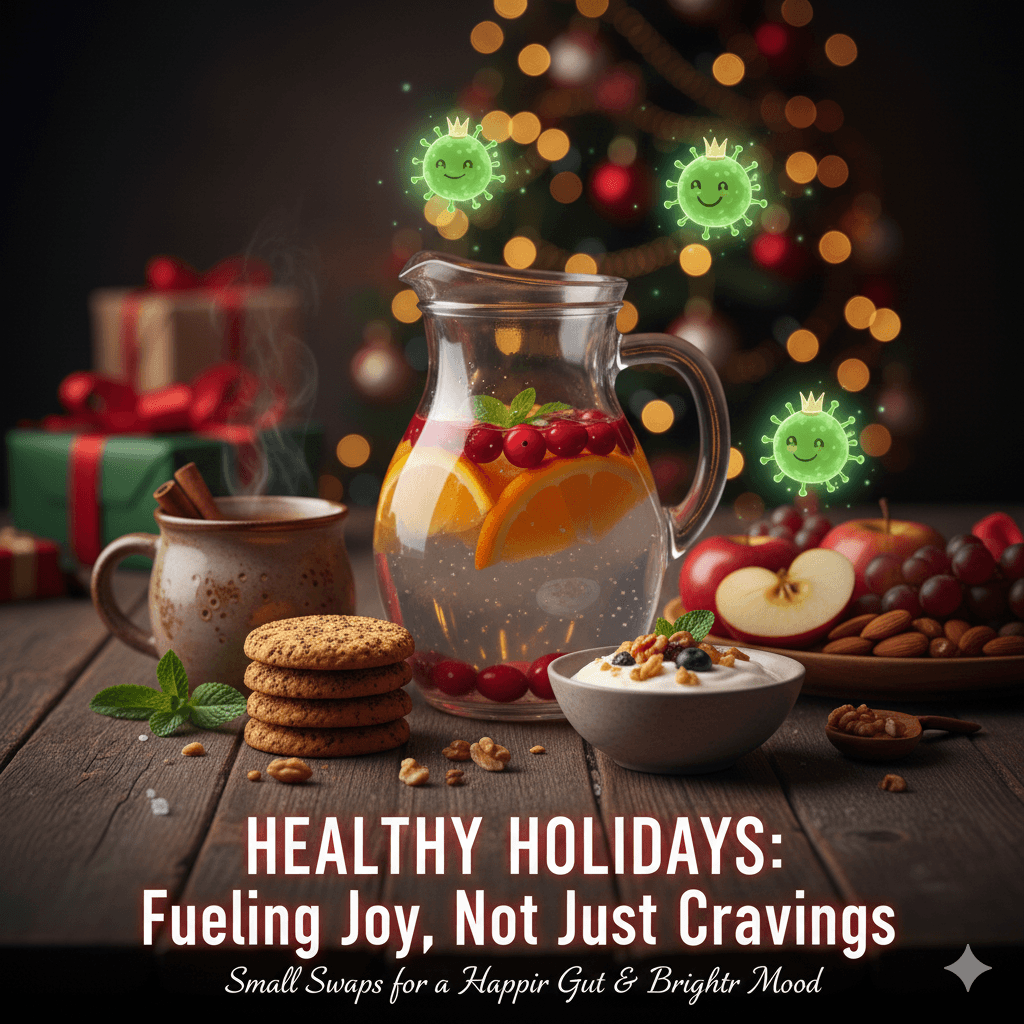
Sparkling water with cranberries, citrus, or mint
Cinnamon or peppermint herbal teas
Kombucha with no added sugar
Fruit platters or yogurt parfaits with nuts and spices
Each swap is a win for your gut, energy, and mood—no need to give up enjoyment.
Keep Energy and Mood Stable
Balance out sweets with snacks that sustain you:
Handful of almonds, walnuts, or pumpkin seeds
Greek yogurt with berries
Oatmeal with cinnamon and chia seeds
These choices help avoid the “sugar crash” and support gut health.
Focus on the “How,” Not Just the “What”
Eat Slowly: Savor your food, and you’ll likely be satisfied with less.
Stay Present: Pair treats with special moments instead of distracted eating.
Celebrate Progress: Every mindful swap or reduction is a step toward better health—applaud your effort, not just the outcome.
Mindful, Not Perfect
If you indulge, enjoy it fully—then gently return to balanced choices without self-judgment. Remember, the goal is long-term well-being, not short-term perfection.
A Last Word: Make Christmas Healthier—One Sweet Swap at a Time
Christmas is about joy and togetherness. The science isn’t meant to take fun away—but to empower small, sustainable changes. Sugary treats don’t need to disappear; they just shouldn’t dominate every celebration or snack.
Reference
Harvard T.H. Chan School of Public Health. (n.d.). The Nutrition Source.
Thanarajah SE, et al. "Soft Drink Consumption and Depression Mediated by Gut Microbiome Alterations." JAMA Psychiatry. Published online October 2025.
UCLA Health. (2023, October 27). It’s sugar season: How to navigate the sweet stuff and protect your health. UCLA Health News.
Wright, N. (2023). How to reduce sugar intake: What does the evidence say? BMJ, 383, e077166.
Not Just Empty Calories: The Hidden Dangers of Holiday Sweets
For many, a slice of cake or a can of soda feels like a harmless ritual. Yet studies published in JAMA Psychiatry and by leading health organizations reveal that these moderate indulgences do far more than add a few extra calories. Consuming soda and similar sweets—especially over the holidays—reshapes your gut microbiome, can elevate depression risk, and fuels inflammation that harms both mind and body.
Chronic Disease and Christmas Treats
Large studies consistently link sweetened beverages and holiday desserts to:
Weight gain and obesity (from high calorie intake and poor satiety)
Type 2 diabetes (driven by blood sugar spikes and insulin resistance)
Heart disease and stroke (from chronic inflammation and lipid imbalance)
Fatty liver (from excess fructose)
Increased cancer risk (due to inflammation and metabolic dysfunction)
Dental erosion and gum disease (especially from sticky and hard Christmas candies)
New Findings: Sugar, Gut Bacteria & Mood
A new German study adds a critical layer—revealing that every incremental increase in soft drink intake raises the odds of depression by about 8%. The risk is highest among women (up 16%), even when adjusting for BMI and antidepressant use. The culprit? Sweets and sweetened drinks fuel the growth of pro-inflammatory gut bacteria like Eggerthella, which is linked to reduced serotonin (the brain’s “feel-good” neurotransmitter), increased inflammation, and depressive symptoms.
How Holiday Sugar Alters Your Gut-Brain Axis
Packed with simple sugars, holiday treats can overwhelm the gut’s capacity to absorb glucose and fructose, leaving extra to feed bad bacteria. This leads to:
More pro-inflammatory bacteria (Eggerthella, Hungatella)
Damaged gut lining and reduced good bacteria
Higher risk of systemic and neuro-inflammation, underpinning depression, anxiety, and fatigue
Evidence confirms that inflammation from excess sugar is tied to over 30% higher risk of depressive symptoms—and the connection is especially marked in women, due to hormone and serotonin dynamics.
The Sweet Cycle—And How to Break It
Sweets hijack both gut and brain. They trigger dopamine surges, driving cravings, energy crashes, and a vicious cycle of mood instability and emotional eating. Artificial sweeteners, once considered safe, may also disrupt gut bacteria and worsen risk for insulin resistance, stroke, and cognitive decline.
Age, Gender, and Holiday Risks
Teens and Young Adults: High sugar intake during adolescence is tied to impaired learning, greater risk of depressed mood, and cognitive decline later in life.
Older Adults: Excess sugar intake adds to inflammation and neurodegenerative risks.
Women: More prone to serotonin disruptions, amplifying mood effects.
Beyond the Brain—Body-wide Harm
Excess sweets contribute to:
Insulin resistance and visceral fat
High blood pressure and atherosclerosis
Accelerated cellular aging (oxidative stress)
Dental decay and costly dental care after the holidays
Even as little as one or two sugary drinks a day increases risk for metabolic and cardiovascular diseases.
Health Coach Guidance: How to Survive the Festive Sugar Rush
The holidays are filled with tempting sweets, but you don’t have to give up everything you love to maintain your well-being. Let’s shift away from guilt or strict avoidance—empower yourself by making mindful choices, building awareness, and celebrating every small victory.
Simple Strategies for Empowered Choices
Start with Curiosity:
Notice what you enjoy most about holiday treats. Is it the flavor, the comfort, the energy boost, or the tradition? Understanding “why” helps you choose “how much” with confidence.Tune In to Your Triggers:
Pay attention to when and why cravings hit hardest. Are you reaching for sweets out of habit, stress, or fatigue? Identifying these patterns is the first step to regaining control.
Festive Swaps Without Missing Out
Try mixing in healthier, festive options alongside your favorites:
Sparkling water with cranberries, citrus, or mint
Cinnamon or peppermint herbal teas
Kombucha with no added sugar
Fruit platters or yogurt parfaits with nuts and spices
Each swap is a win for your gut, energy, and mood—no need to give up enjoyment.
Keep Energy and Mood Stable
Balance out sweets with snacks that sustain you:
Handful of almonds, walnuts, or pumpkin seeds
Greek yogurt with berries
Oatmeal with cinnamon and chia seeds
These choices help avoid the “sugar crash” and support gut health.
Focus on the “How,” Not Just the “What”
Eat Slowly: Savor your food, and you’ll likely be satisfied with less.
Stay Present: Pair treats with special moments instead of distracted eating.
Celebrate Progress: Every mindful swap or reduction is a step toward better health—applaud your effort, not just the outcome.
Mindful, Not Perfect
If you indulge, enjoy it fully—then gently return to balanced choices without self-judgment. Remember, the goal is long-term well-being, not short-term perfection.
A Last Word: Make Christmas Healthier—One Sweet Swap at a Time
Christmas is about joy and togetherness. The science isn’t meant to take fun away—but to empower small, sustainable changes. Sugary treats don’t need to disappear; they just shouldn’t dominate every celebration or snack.
Reference
Harvard T.H. Chan School of Public Health. (n.d.). The Nutrition Source.
Thanarajah SE, et al. "Soft Drink Consumption and Depression Mediated by Gut Microbiome Alterations." JAMA Psychiatry. Published online October 2025.
UCLA Health. (2023, October 27). It’s sugar season: How to navigate the sweet stuff and protect your health. UCLA Health News.
Wright, N. (2023). How to reduce sugar intake: What does the evidence say? BMJ, 383, e077166.
Not Just Empty Calories: The Hidden Dangers of Holiday Sweets
For many, a slice of cake or a can of soda feels like a harmless ritual. Yet studies published in JAMA Psychiatry and by leading health organizations reveal that these moderate indulgences do far more than add a few extra calories. Consuming soda and similar sweets—especially over the holidays—reshapes your gut microbiome, can elevate depression risk, and fuels inflammation that harms both mind and body.
Chronic Disease and Christmas Treats
Large studies consistently link sweetened beverages and holiday desserts to:
Weight gain and obesity (from high calorie intake and poor satiety)
Type 2 diabetes (driven by blood sugar spikes and insulin resistance)
Heart disease and stroke (from chronic inflammation and lipid imbalance)
Fatty liver (from excess fructose)
Increased cancer risk (due to inflammation and metabolic dysfunction)
Dental erosion and gum disease (especially from sticky and hard Christmas candies)
New Findings: Sugar, Gut Bacteria & Mood
A new German study adds a critical layer—revealing that every incremental increase in soft drink intake raises the odds of depression by about 8%. The risk is highest among women (up 16%), even when adjusting for BMI and antidepressant use. The culprit? Sweets and sweetened drinks fuel the growth of pro-inflammatory gut bacteria like Eggerthella, which is linked to reduced serotonin (the brain’s “feel-good” neurotransmitter), increased inflammation, and depressive symptoms.
How Holiday Sugar Alters Your Gut-Brain Axis
Packed with simple sugars, holiday treats can overwhelm the gut’s capacity to absorb glucose and fructose, leaving extra to feed bad bacteria. This leads to:
More pro-inflammatory bacteria (Eggerthella, Hungatella)
Damaged gut lining and reduced good bacteria
Higher risk of systemic and neuro-inflammation, underpinning depression, anxiety, and fatigue
Evidence confirms that inflammation from excess sugar is tied to over 30% higher risk of depressive symptoms—and the connection is especially marked in women, due to hormone and serotonin dynamics.
The Sweet Cycle—And How to Break It
Sweets hijack both gut and brain. They trigger dopamine surges, driving cravings, energy crashes, and a vicious cycle of mood instability and emotional eating. Artificial sweeteners, once considered safe, may also disrupt gut bacteria and worsen risk for insulin resistance, stroke, and cognitive decline.
Age, Gender, and Holiday Risks
Teens and Young Adults: High sugar intake during adolescence is tied to impaired learning, greater risk of depressed mood, and cognitive decline later in life.
Older Adults: Excess sugar intake adds to inflammation and neurodegenerative risks.
Women: More prone to serotonin disruptions, amplifying mood effects.
Beyond the Brain—Body-wide Harm
Excess sweets contribute to:
Insulin resistance and visceral fat
High blood pressure and atherosclerosis
Accelerated cellular aging (oxidative stress)
Dental decay and costly dental care after the holidays
Even as little as one or two sugary drinks a day increases risk for metabolic and cardiovascular diseases.
Health Coach Guidance: How to Survive the Festive Sugar Rush
The holidays are filled with tempting sweets, but you don’t have to give up everything you love to maintain your well-being. Let’s shift away from guilt or strict avoidance—empower yourself by making mindful choices, building awareness, and celebrating every small victory.
Simple Strategies for Empowered Choices
Start with Curiosity:
Notice what you enjoy most about holiday treats. Is it the flavor, the comfort, the energy boost, or the tradition? Understanding “why” helps you choose “how much” with confidence.Tune In to Your Triggers:
Pay attention to when and why cravings hit hardest. Are you reaching for sweets out of habit, stress, or fatigue? Identifying these patterns is the first step to regaining control.
Festive Swaps Without Missing Out
Try mixing in healthier, festive options alongside your favorites:
Sparkling water with cranberries, citrus, or mint
Cinnamon or peppermint herbal teas
Kombucha with no added sugar
Fruit platters or yogurt parfaits with nuts and spices
Each swap is a win for your gut, energy, and mood—no need to give up enjoyment.
Keep Energy and Mood Stable
Balance out sweets with snacks that sustain you:
Handful of almonds, walnuts, or pumpkin seeds
Greek yogurt with berries
Oatmeal with cinnamon and chia seeds
These choices help avoid the “sugar crash” and support gut health.
Focus on the “How,” Not Just the “What”
Eat Slowly: Savor your food, and you’ll likely be satisfied with less.
Stay Present: Pair treats with special moments instead of distracted eating.
Celebrate Progress: Every mindful swap or reduction is a step toward better health—applaud your effort, not just the outcome.
Mindful, Not Perfect
If you indulge, enjoy it fully—then gently return to balanced choices without self-judgment. Remember, the goal is long-term well-being, not short-term perfection.
A Last Word: Make Christmas Healthier—One Sweet Swap at a Time
Christmas is about joy and togetherness. The science isn’t meant to take fun away—but to empower small, sustainable changes. Sugary treats don’t need to disappear; they just shouldn’t dominate every celebration or snack.
Reference
Harvard T.H. Chan School of Public Health. (n.d.). The Nutrition Source.
Thanarajah SE, et al. "Soft Drink Consumption and Depression Mediated by Gut Microbiome Alterations." JAMA Psychiatry. Published online October 2025.
UCLA Health. (2023, October 27). It’s sugar season: How to navigate the sweet stuff and protect your health. UCLA Health News.
Wright, N. (2023). How to reduce sugar intake: What does the evidence say? BMJ, 383, e077166.


View our other posts
Subscribe
Join our newsletter to stay up to date on features and releases.
By subscribing you agree to with our Privacy Policy and provide consent to receive updates from our company.
Subscribe
Join our newsletter to stay up to date on features and releases.
By subscribing you agree to with our Privacy Policy and provide consent to receive updates from our company.
Subscribe
Join our newsletter to stay up to date on features and releases.
By subscribing you agree to with our Privacy Policy and provide consent to receive updates from our company.

